
If you are new to online business you might be asking your self a common question: How does digital marketing actually work? You may also wonder how big brands and small businesses use the internet to find customers and grow sales.
At first digital marketing can look confusing. There are many tools, platforms and strategies. But the truth is very simple. Digital marketing follows a clear and step-by-step process that any business can learn and use.
In this guide you will understand how digital marketing works from start to finish how different channels work together and how businesses use them to bring visitors turn them into customers and earn money.
What Is Digital Marketing?
Before learning how digital marketing works let’s understand what it means.
Digital marketing means using to the internet and online platforms to promote and sell products or services to people.This includes platforms like search engines, social media, websites, emails and online ads.
Digital marketing includes different parts such as:
- Search Engine Optimization (SEO)
- Content Marketing
- Social Media Marketing
- Paid Advertising (Google Ads,Facebook Ads)
- Email Marketing
- Website Improvement
- Analytics and Tracking
All these parts work together to help a brand grow online.
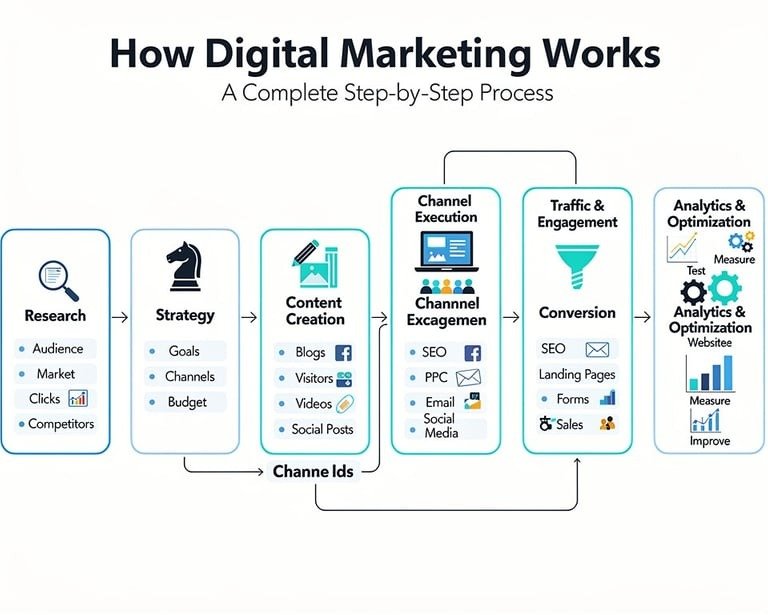
How Digital Marketing Works: Step-by-Step Process
Digital marketing follows a planned process. Whether it is a small shop or a big company the steps are mostly same.
1. Knowing the Target Audience
Everything starts with understanding people.
Businesses try to learn about their audience such as:
- Age
- Location
- Interests
- Online habits
- Buying behavior
- Problems they face
- What they want
This helps businesses create messages that feel personal and useful.
Example:
If you run a online marketing agency your audience may be business owners and online sellers.
2. Setting Clear Goals
Every digital marketing plan needs a goal.
Common goals include:
- Getting more website visitors
- Collecting leads
- Increasing our brand awareness
- Selling more products
- Building customer trust
- Launching new services
Clear goals help businesses decide what to focus on.
3. Creating a Strong Website
A website is the main home of a business online.
A good website should be:
- Fast to load
- Easy to use on mobile phones
- Simple to understand
- Search-engine friendly
- Designed to guide visitors
A website should be help visitors take action like signing up or buying something.
4. Finding the Right Keywords
Keyword research means find out what people type into Google.
Businesses use tools to discover words and phrases their audience searches for. These keywords help to businesses create content that matches what people are looking for.
When the right keywords are used to the website becomes easier to find.
5. Planning a Digital Marketing Strategy
After research businesses create a full plan.
This plan usually includes:
- SEO plan
- Content creation plan
- Social media plan
- Paid advertising plan
- Email marketing plan
- Conversion improvement plan
This strategy acts like map that guides every step.
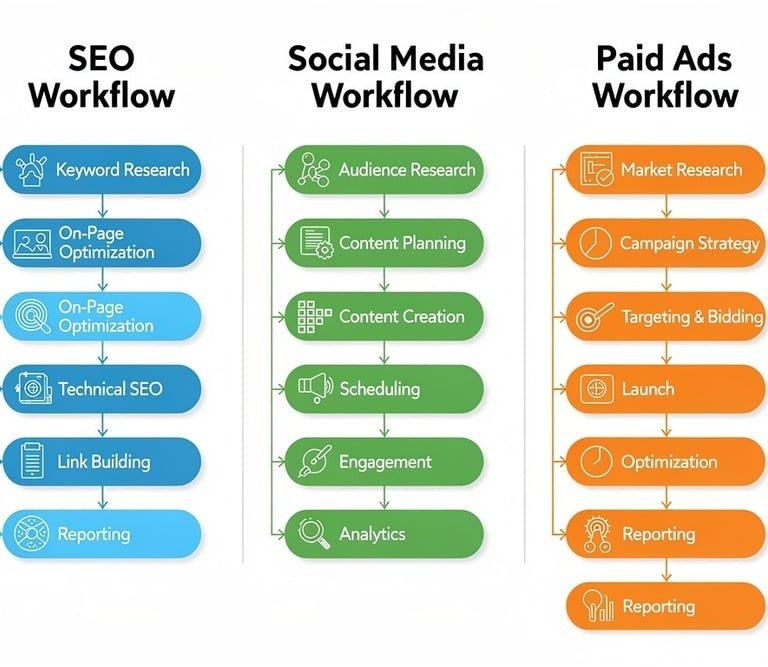
6. Search Engine Optimization (SEO)
SEO helps to websites appear higher on Google.
SEO includes:
- Improving website pages
- Fixing technical issues
- Getting quality links
- Writing helpful content
Good SEO brings free traffic from search engines over time.
7. Content Marketing
Content is the part of digital marketing.
Businesses create content like:
- Blog posts
- Articles
- Videos
- Images
- Social media posts
- Guides and ebooks
Content helps people learn builds trust and brings visitors to the website.
Simply put content attracts people.
8. Social Media Marketing
Social media helps to businesses talk directly with people.
Popular platforms include:
- YouTube
Social media helps with:
- Connecting with users
- Growing our brand awareness
- Sharing content
- Promoting products
- Bringing traffic
This is where daily interaction happens.
9. Paid Advertising
Paid ads help businesses get quick results.
Common types of paid ads are:
- Google search ads
- Social media ads
- YouTube ads
- Display ads
- Retargeting ads
Paid advertising helps to businesses reach the right people faster.
10. Email Marketing
Email marketing helps businesses stay in touch.
Businesses send emails such as:
- Welcome emails
- Offers and updates
- Newsletters
- Automated messages
- Reminder emails
Email marketing builds long-term relationships and repeat sales.
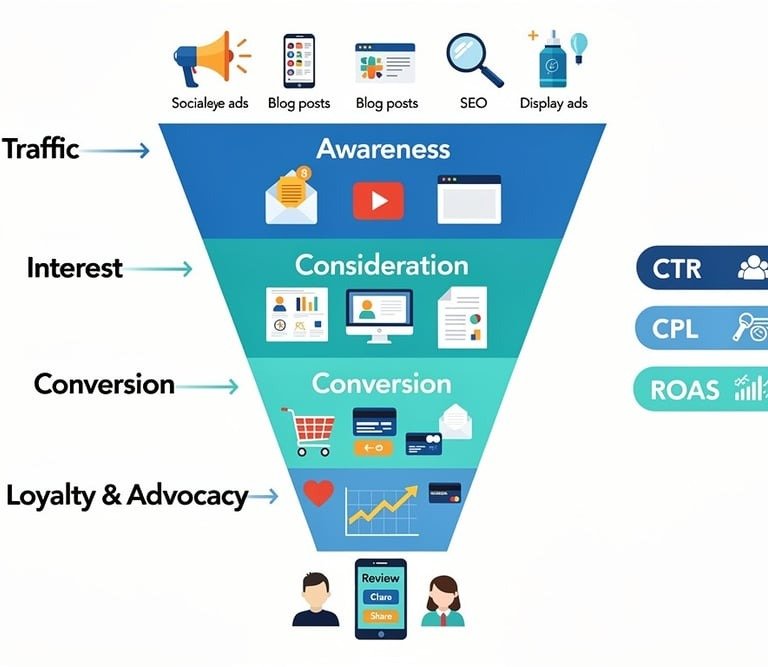
11. Using a Sales Funnel
A sales funnel shows the customer journey.
The stages are:
- Awareness: People discover the brand
- Interest: They read or watch content
- Consideration: They compare choices
- Conversion: They buy
- Retention: They come back again
Funnels help turn visitors into loyal customers.
12. Improving Conversions
Conversion rate optimization helps convert more visitors into customers.
This includes:
- Testing different designs
- Making pages faster
- Using clear buttons
- Writing better messages
Small changes can create big results.
13. Tracking and Improving Results
Digital marketing always uses data.
Tools help track:
- Website traffic
- Clicks
- Sales
- User behavior
- Engagement
By checking results, businesses improve what works and fix what doesn’t.
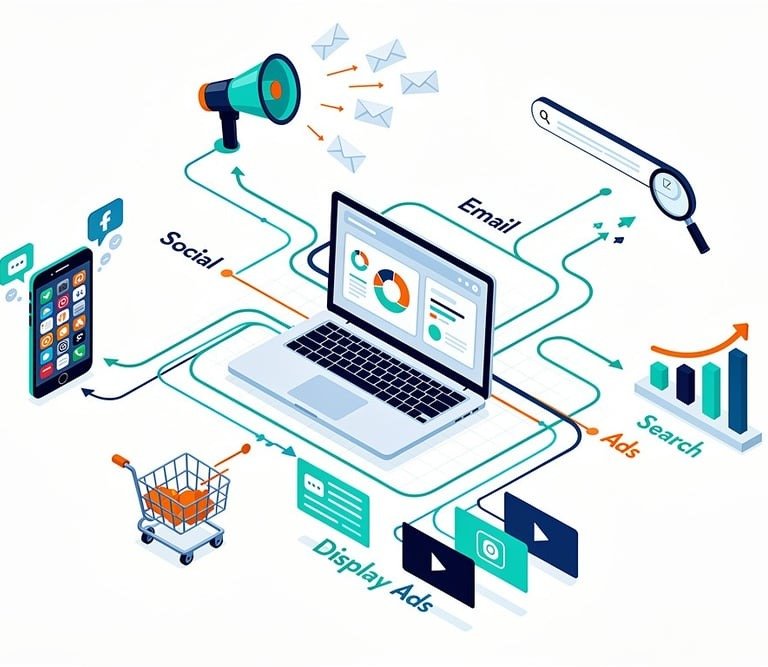
How Digital Marketing Channels Work Together
Digital marketing works best when all online channels help each other like a team. Each channel has its own job but together they create better results.
For example:
- SEO helps people find your website on Google
- Content explains things and teaches users
- Social media helps people like, share, and talk about your brand
- Paid ads bring visitors and leads quickly
- Email marketing builds trust and turns leads into customers
- Analytics shows what is working and what needs to be improved
When all these channels work together digital marketing becomes stronger and more effective. This teamwork is what makes online marketing so powerful.
Benefits of Digital Marketing for Businesses
Digital marketing helps to businesses in many simple and powerful ways. It makes marketing easier faster and more effective.
✔ Affordable: Costly less than traditional marketing like TV or print ads
✔ Reach Anywhere: Connect with people all over the world
✔ Right Audience: Show your products to people who really want them
✔ Easy to Measure: See exactly how your campaigns are performing
✔ Faster Growth: Attract more customers quickly
✔ Better Brand Visibility: Make your business known online
✔ Increase Sales: Turn visitors into buyers and boost revenue
No matter if a business is small or big digital marketing helps it grow reach more people and succeed online.
Digital marketing process explained
SEO, social media, and paid ads workflow
Digital marketing funnel example
Digital marketing channels interaction
Conclusion: How Digital Marketing Works
Digital marketing works by first knowing who the customers are, then creating helpful and interesting content for them. This content is made easy to find online shared on social media and promoted with ads. Businesses stay connected with people through emails and keep checking the results to make things better and better.
No matter if you own a small business, run an agency, or build your own personal brand, digital marketing helps you find more customers, sell more, and grow step by step in today’s online world.